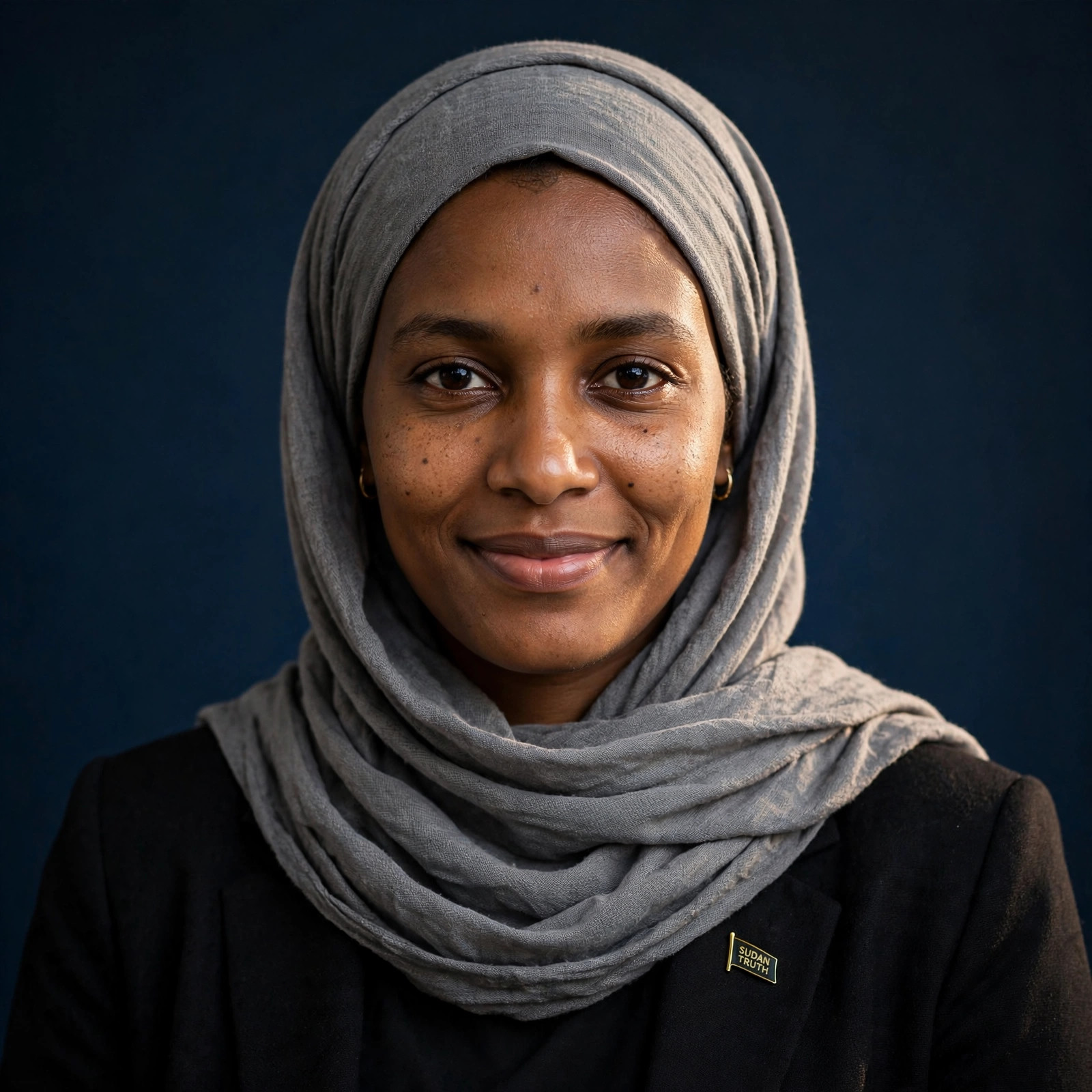
 By: Nada Othman — Daily Bulletins
Friday, October 23, 2026
📍 From the Field In North Kordofan, Reuters quoted the farmer Mariam Omar, near the town of Umm Rawaba, as saying "this year is very bad", as she pulled weeds from withered crops in dry sandy soil that was supposed to be on the verge of harvest, while the farmer and trader Mohamed Abdel Rahman estimated for Reuters that about 40 percent of the land in the area will yield no harvest at all. And in the livestock market in El Obeid, the trader Siraj al-Din Abdel Latif told Reuters: "At this time of year the livestock are usually fat and everyone makes profits, but now the livestock have become emaciated". And in Tawila camp in Darfur, which houses about 700,000 displaced people, the World Food Programme told Reuters that food rations had been cut in half, and the displaced teacher Suad Ahmed, who arrived in Tawila from east of El Fasher in search of food, said that many people told her on the way: "If you find food and drink there, please tell us".
And in East Darfur, eyewitnesses told Darfur24 that two drone attacks on Thursday afternoon, October 22, targeted a market in the Arab neighbourhood in the city of El Daein and the market of the town of Abu Jabara, resulting in the killing of civilians, one of them a child, and the injury of five others, and a resident of Abu Jabara, Ahmed Abdel Aziz, told Darfur24 that the shelling that hit the town's market resulted in the killing of civilians, one of them a child. And in El Fasher, Amnesty International, in new testimonies it published today from residents who recently fled the city, said that the number of those who remained in it is less than 70,000 people compared with more than a million before the war, and that schools had been turned into detention centres, and Aloya, a 54-year-old Zaghawa woman who was detained in a school, told the organisation: "Four to five people were dying daily, most of them because of a lack of food".
1️⃣ El Niño drought pushes Sudan towards the risk of a new famine and the World Food Programme warns of 1.2 million additional hungry people Reuters said today that a drought linked to the El Niño phenomenon is hitting crops and livestock in Sudan, and that rainfall between July and September was the lowest in more than three decades, and the lowest in North Darfur since 1984. The UN-backed Integrated Food Security Phase Classification initiative warned on October 12 that "the risk of famine is increasing in many of the areas affected by the conflict". The World Food Programme's Sudan director, Samuel Klendon, told Reuters that the programme expects an additional 350,000 people to be in severe hunger by the end of 2026, rising to an additional 1.2 million by August 2027, and that the most affected areas are Darfur and Kordofan, while the acting executive director, Carl Skau, described the coincidence of the decline in aid with the decline in crops as "a certain disaster". (Sources: Reuters, World Food Programme, Integrated Food Security Phase Classification initiative) 💡 Quick reading: Analysis — the danger is no longer only military; when drought combines with the cutting of rations and a lack of funding, the harvest season itself turns from an opportunity to catch one's breath into a factor pushing more families to flee in search of food.
2️⃣ BBC investigation: 43 attacks on El Fasher hospitals and the Human Rights Commissioner hints at war crimes An investigation published by the BBC documented no fewer than 43 separate attacks on hospitals and health sites in El Fasher between May 2024 and October 2025, during the Rapid Support Forces' siege of the city and its fall into their hands a year ago, and recorded the killing of 55 health workers, the injury of 120 and the kidnapping or disappearance of 10 others between April 2023 and October 2025. The UN High Commissioner for Human Rights, Volker Türk, said the findings are "extremely worrying" and that the repeated attacks on civilian and health infrastructure are grave violations of international humanitarian law that may amount to war crimes. The Rapid Support Forces rejected the findings, and the Minister of Health in its parallel civilian government, Alaa al-Din Naqd, described the accusations as propaganda, saying that the South Hospital had been used as a military base, which the BBC said it had found no independent evidence for. (Sources: BBC, UN High Commissioner for Human Rights, World Health Organization) 💡 Quick reading: Analysis — the importance of the investigation is that it links the destruction of health care to the emptying of the city of its residents, and moves the El Fasher file from an exchange of accusations to documentation that can be held to international account, even though describing them as war crimes is a human-rights assessment, not a judicial ruling.
3️⃣ Khartoum welcomes the truce proposal and requests technical consultations and Guterres calls for a halt to arming the killers of civilians The adviser to the President of the Sovereignty Council for political affairs and foreign relations, Amjad Farid, confirmed that the Government of Sudan welcomed the proposed humanitarian truce and called for starting serious technical consultations to discuss the practical arrangements for implementing it in a way that ensures its effectiveness, and accused the US President's adviser, Massad Boulos, of demanding that Sudan accept the truce while avoiding discussion of its technical details and implementation mechanisms. In parallel, the UN Secretary-General, António Guterres, commenting on the consultative meeting in Geneva on strengthening peace efforts in Sudan, stressed the need for the countries surrounding Sudan, or those farther away geographically, to stop supplying weapons to those who kill civilians, and confirmed that he will discuss Sudan with officials in Egypt during his visit which begins on Friday, saying that his message is "stop the expansion of the war, protect civilians and provide the political space needed for diplomacy and peace". (Sources: Nabdh Al-Sudan citing Amjad Farid, UN News) 💡 Quick reading: Analysis — the welcome is conditional on guarantees, neither a disguised rejection nor an open acceptance; and the real battle over the truce now is not in announcing it but in the details of implementation, monitoring and stopping the flow of weapons.
— Editorial Team